
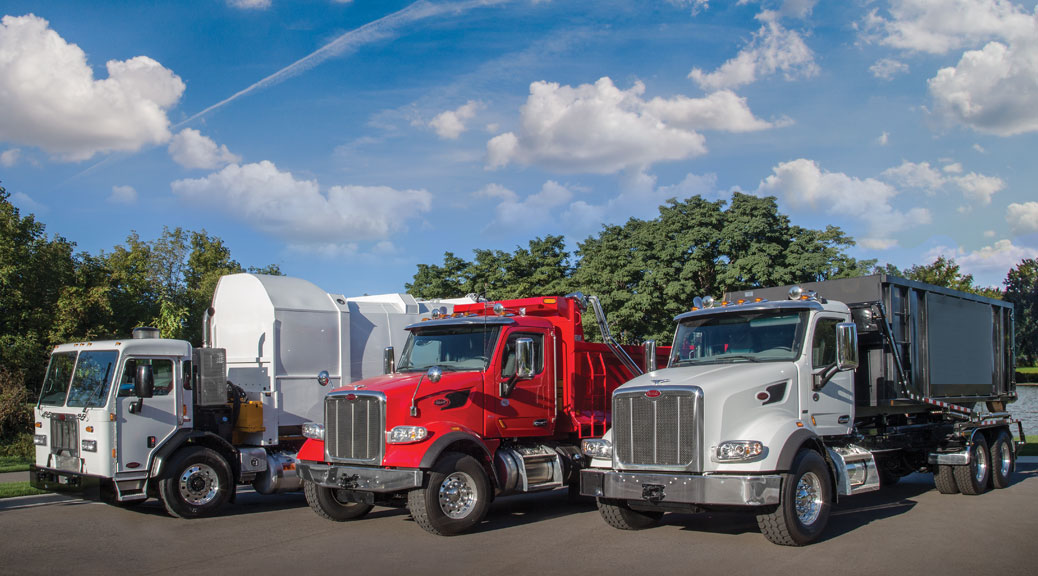
There are many factors to consider when purchasing a truck for a vocational application. Whether it’s a dump truck, mixer, refuse truck, or another specialty application, making the right decision starts with understanding how the truck will be used. Here are a few key considerations to help guide you.
Know your state regulations for weight restrictions
When it comes to weight laws, “bridge laws” don’t just refer to driving over bridges, they’re about properly distributing weight across the number of axles on your truck. In general, the more axles you have, the better the weight is distributed, reducing the impact on the road.
If your business depends on maximizing payload, whether you’re a dispatcher, fleet manager, or owner-operator, it’s critical to understand the county and state weight regulations where you operate.
Spec’ing a truck that doesn’t align with those laws can lead to compliance issues and limit your ability to meet payload goals. Many state universities offer continuing education programs to help operators stay up to date. For example, Minnesota offers a Truck Weight Compliance Program designed to keep fleets informed and compliant.
Weights Matter More than Ever
2027 will mark 20 years of emissions regulations on commercial vehicles. Each time a new emissions or greenhouse gas (GHG) standard has been introduced, additional components have added weight to these trucks. More weight on the equipment directly reduces payload per trip.
That reduction adds up quickly. To move the same total tonnage for a job, fleets are forced to run more trips, which impact fuel costs, labor, and overall efficiency. The challenge is that weight laws have largely remained unchanged despite these added components.
As we approach the 2027 emissions standards, even more weight will be introduced. Every pound matters, and every inch of frame rail counts. Working with industry associations, lobbyists, and legislators will be important long-term, but in the short term, being intentional about every pound added to a truck is one of the few ways fleets can maintain productivity.
Power Isn’t the Only Factor When Choosing an Engine
The engine is one of the most important components of your truck, and while horsepower is often the first consideration, it’s not the only one. You’ll want to match engine power to your application and workload. For instance, if your operation involves mountain driving or hauling loads over 80,000 lbs., a 15-liter engine may be necessary. On flatter terrain with lighter loads, a smaller engine could be a more efficient choice. Another often-overlooked factor is where the truck will operate. Access to certified service matters, especially since warranty work must be performed by authorized technicians. If your routes take you into more remote areas, it’s important to choose an engine brand with strong service support in those regions.
Think About the Driver
Your drivers play a major role in productivity, safety, and retention, so their experience behind the wheel should be part of your decision. If reducing training time is important, consider automatic transmissions. Shifting is one of the more difficult skills for new drivers to learn, and in stop-and-go environments, automatics can make driving easier and less fatiguing. They can also help create more consistency across drivers of varying experience levels. Safety features are another key consideration. Options like electronic stability control, anti-rollover systems, and air disc brakes can enhance control and reduce risk. These technologies help maintain traction, improve handling in emergency situations, and provide shorter stopping distances.
Custom-Built vs. Work-Ready Trucks
If you need a single truck, or need one quickly, a work-ready unit can be a great option. Many dealerships offer a wide selection of vocational trucks that are already spec’d and ready to go to work, including mixer, dump, refuse, utility, crane, and tank trucks. These trucks are typically built with common specifications for specific applications, allowing you to put them to work immediately with little to no wait time. They’re also a great solution for handling unexpected increases in demand. If your operation requires more specialized equipment, or you’re building out a fleet, custom builds are often the better route. Through established relationships with body builders and access to both heavy-duty and medium-duty chassis, it’s possible to configure a truck to meet very specific operational needs. A standardized, purpose-built fleet can simplify driver training, streamline maintenance, and make parts inventory more efficient.
Maintenance Should Be A Strategy, Not A Reaction
As the old adage goes, “one ounce of prevention is worth a pound of cure.” In today’s environment, when it comes to preventative maintenance, it’s closer to two pounds of cure.
Many truck owners are still following maintenance habits from 20 years ago, but the equipment has changed dramatically. With diesel particulate filters (DPFs) approaching 20 years in use, fleets should no longer be asking when to service them, they should already have scheduled intervals in place.
Proactive maintenance such as cleaning dosers, DEF filters, and DPF filter helps prevent costly downtime and keeps warning lights from interrupting operations in the middle of the workday. Yet too often, maintenance is still reactive, waiting until an issue forces the truck off the road. Whether it’s through a contract maintenance program or a trusted service partner, every fleet needs a plan to keep equipment running and generating revenue instead of unexpected repair bills.
The market has increasingly moved toward extended warranties on both new and used equipment to help offset the cost of breakdowns. However, those warranties require proper maintenance documentation to remain valid, making consistent service practices even more critical. As the saying goes, “Failing to plan is planning to fail.”
By understanding your payload requirements, operating environment, working conditions, and driver needs, you’ll be better prepared to work with your sales representative and choose the right truck whether it’s custom-built, or work-ready for your vocational application. If you’re exploring options, take a look at our available commercial trucks and inventory to find equipment that’s ready to go to work today: https://www.allstatepeterbilt.com/commercial-trucks