

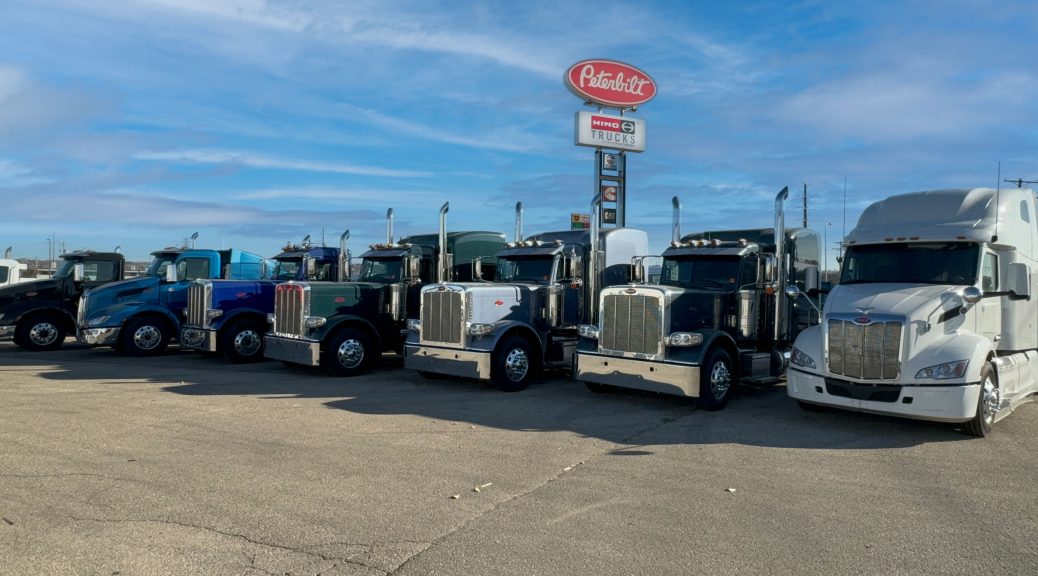
Shopping for a used Class 8 semi truck is a big decision—one that affects uptime, safety, and your bottom line. Auctions can look tempting because the prices appear lower, but the fine print (and the unknowns) often shift the risk and cost right back onto the buyer.
Here’s why purchasing from a reputable dealer is usually the smarter move—especially for owner-operators and fleets that need predictable performance.
1. Auctions are typically “AS-IS, WHERE-IS”—and that’s not just a phrase
Most commercial truck auctions clearly state that units are sold “AS-IS, Where Is and WITH ALL FAULTS” with no warranty or guarantee. They also spell out that buyers are responsible for verifying condition and information before bidding, and that key items like mileage/odometer, mechanical fitness, and structural condition may not be guaranteed.
What that means in real life:
- If the truck needs any work next week, that’s on you.
- If there’s a coolant leak you didn’t catch in a fast walkaround, that’s on you.
- If the listing mileage is off (and it’s not legally required to be guaranteed), that’s on you.
A dealer transaction, by contrast, can include documented reconditioning, service records, and warranty options—so you’re not betting your next 90 days of revenue on a 3-minute look.
2. Auction pricing isn’t always what it seems
At first glance, aution pricing can look attractive, but the final purchase price is often harder to pin down than expected. Buying from auctions can have hidden fees and added risks. Buying from an Allstate Peterbilt dealer offers piece of mind and access to resources that help protect your investment long after the purchase.
- Financing
- Warranties – Shop rates continue to increase along with complexity of engines and trucks in general
- Knowledge – trained staff (parts, techs, sales staff)
- We build repour as we want to have a customer for life!! We are in this together. You win – We win!
3. A “condition report” isn’t the same as a real inspection
Auction condition reports are often described as visual representations and explicitly not complete mechanical/electrical/structural inspections.
A dealer can typically offer:
- A fuller evaluation by trained techs (often ASE-certified in many service networks)
- The ability to address issues before delivery
- A clear estimate of what’s been fixed vs. what’s still “as traded”
Even consumer-protection guidance for used vehicles consistently emphasizes that an independent mechanical inspection is worth doing, and that a history report isn’t a substitute for an inspection.
4. Title, odometer, and “brand” surprises are real risks—dealers help reduce them
When you buy used, you’re managing risks like:
- Title brands (salvage, flood, rebuilt)
- Odometer inconsistencies
- Prior theft records (sometimes)
One of the best tools to reduce those risks is NMVTIS (National Motor Vehicle Title Information System), which is designed to provide title information, the most recent odometer reading, and brand history before purchase.
A good dealer will often:
- Help verify title status up front
- Provide vehicle history documentation when available
- Walk you through what’s known vs. unknown before you sign
At an auction, you’re often piecing this together yourself—under time pressure.
5. Safety recalls are easier to verify (and address) before you take delivery
Even experienced buyers forget this step in the rush of a purchase. NHTSA provides a VIN lookup tool to check for open safety recalls.
A dealer purchase typically gives you:
- More time to run a recall check
- A path to get recall work scheduled
- Support coordinating service after the sale
With an auction, you may be arranging all of that after the truck is already yours—and already down.
6. Dealer support protects your most expensive asset: uptime
Uptime is everything. A dealer relationship usually comes with advantages auctions can’t match:
- Service department access and scheduling support
- Parts availability and knowledgeable counter staff
- The ability to plan repairs, preventative maintenance, and upgrades proactively
- More predictable post-sale accountability than a one-time auction transaction
Even if you pay a bit more upfront, a single avoided breakdown—or one major repair you didn’t inherit—can more than close the gap.
7. Financing is usually cleaner—and built around your operation
Auctions can add complications like immediate payment requirements, buyer fees, transport logistics, and limited time to verify condition. Some auctions also list additional fees and policies that can change the true out-the-door number fast.
A dealer can typically provide:
- Financing options designed for commercial equipment
- Trade-in help
- A clearer picture of total cost, delivery timing, and what’s included
The bottom line
Auctions can work for highly experienced buyers who have time, inspection resources, and a strong tolerance for risk. But for most businesses, a dealer purchase is the safer, more predictable path because it reduces “unknown unknowns” and supports what matters most: reliability and uptime.
“What I’ve learned from being in the dealership world is that we don’t just sell trucks — we sell peace of mind, relationships, and resources. I can’t get it right 100% of the time, but I can make sure every truck is inspected by our certified shop, reviewed by engine specialists, and test-driven before it ever reaches a customer. Used equipment is a tough business — there’s no crystal ball — but buying from an established dealer group gives you the best possible odds.” – Ryan Syverson, Used Truck Sales Manager
Visit your nearest Allstate Peterbilt dealership and let our experienced team help you find a truck that fits your operation, your budget, and your goals.